如何縮短《 International Journal of Oral Science》雜志的審稿周期?
來源:優(yōu)發(fā)表網(wǎng)整理 2025-12-15 15:06:25 3456人看過
想要縮短《 International Journal of Oral Science》雜志的審稿周期需要作者、編輯部和審稿人等多方面的共同努力,作者可以采取一些有效措施,間接地加快審稿進度,提升稿件的處理效率。
建議如下:
一、提高論文質(zhì)量
(1)嚴(yán)格遵循投稿要求:在投稿前,仔細(xì)閱讀《 International Journal of Oral Science》雜志的投稿指南,包括格式要求、字?jǐn)?shù)限制、參考文獻格式等。確保稿件符合雜志的規(guī)范,避免因格式問題被退回修改,從而耽誤時間。
(2)提高論文質(zhì)量:確保論文的研究內(nèi)容具有創(chuàng)新性和學(xué)術(shù)價值,數(shù)據(jù)準(zhǔn)確,論證嚴(yán)謹(jǐn),語言表達清晰流暢。高質(zhì)量的稿件更容易通過初審,進入同行評審階段。
二、選擇合適的投稿時機
(1)關(guān)注期刊審稿周期:在投稿前,了解《 International Journal of Oral Science》雜志的審稿周期(預(yù)計1-3個月)和發(fā)表周期(季刊),以便合理安排投稿時間。
(2)關(guān)注期刊動態(tài):了解期刊的專題征稿或熱點話題,針對性地投稿,可能獲得優(yōu)先處理。
三、與編輯部保持良好溝通
(1)主動了解審稿進度:如果超過預(yù)計的審稿時間仍未收到回復(fù),可以禮貌地向編輯部發(fā)送郵件,詢問稿件的審稿進度。
(2)尊重審稿意見:認(rèn)真對待審稿意見,積極修改論文中的不足之處,共同探討論文的改進方向。
需要注意的是,縮短審稿周期的前提是保證稿件的質(zhì)量,不能為了追求速度而犧牲學(xué)術(shù)嚴(yán)謹(jǐn)性。
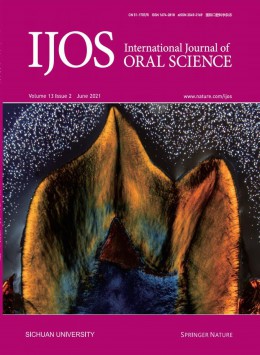
《 International Journal of Oral Science》雜志創(chuàng)刊于2009年,是由中華人民共和國教育部主管、四川大學(xué)主辦的學(xué)術(shù)理論季刊。國內(nèi)刊號CN:51-1707/R,國際刊號ISSN:1674-2818。該雜志以推動醫(yī)學(xué)改革與發(fā)展、探索醫(yī)學(xué)規(guī)律為宗旨,致力于為醫(yī)學(xué)工作者、研究者和管理者提供一個學(xué)術(shù)交流的平臺。
《 International Journal of Oral Science》雜志投稿建議:
Abstract
A concise and factual abstract is required. The abstract of original article should state briefly the purpose of the research, the principal results and major conclusions with such headings in a structured format. An abstract is often presented separately from the article, so it must be able to stand alone. For this reason, References should be avoided, but if essential, then cite the author(s) and year(s). Also, non-standard or uncommon abbreviations should be avoided, but if essential they must be defined at their first mention in the abstract itself. The length should be less than 250 words for review and original research, less than 100 words for case report. Abstract is not required for letter.
Keywords
Immediately after the abstract, provide a maximum of 5, but at least 3, keywords , using American spelling and avoiding general and plural terms and multiple concepts (avoid, for example, "and", "of"). Be sparing with abbreviations: only abbreviations firmly established in the field may be eligible. These keywords will be used for indexing purposes.
Abbreviations
Define abbreviations that are not standard in this field in a footnote to be placed on the first page of the article. Such abbreviations that are unavoidable in the abstract must be defined at their first mention there, as well as in the footnote. Ensure consistency of abbreviations throughout the article.
Acknowledgements
Collate acknowledgements in a separate section at the end of the article before the references and do not, therefore, include them on the title page, as a footnote to the title or otherwise. List here those individuals who provided help during the research (e.g., providing language help, writing assistance or proof reading the article, etc.).
Conflict of interst
All authors must disclose any financial and personal relationships with other people or organizations that could inappropriately influence (bias) their work at the end of the article before the references. If there are no conflicts of interest then please state this: 'Conflicts of interest: none'.
Nomenclature and units
Follow internationally accepted rules and conventions: use the international system of units (SI). If other quantities are mentioned, give their equivalent in SI. You are urged to consult IUB: Biochemical Nomenclature and Related Documents.
Footnotes
Footnotes should be used sparingly. Number them consecutively throughout the article. Many word processors can build footnotes into the text, and this feature may be used. Otherwise, please indicate the position of footnotes in the text and list the footnotes themselves separately at the end of the article. Do not include footnotes in the Reference list.
聲明:以上內(nèi)容來源于互聯(lián)網(wǎng)公開資料,如有不準(zhǔn)確之處,請聯(lián)系我們進行修改。